
MetroHyVe3 successfully launched: Kick-off Meeting at NPL in Teddington
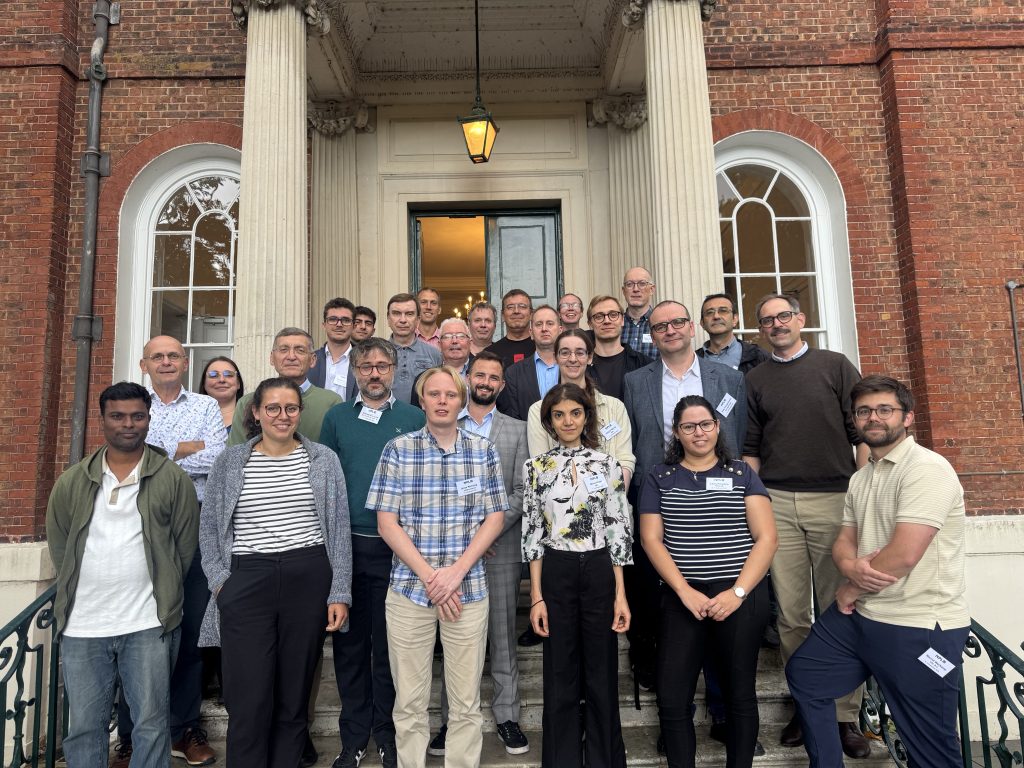
On September 3–4, 2025, the kick-off meeting of the European research project MetroHyVe3 took place at the Historical Museum of the National Physical Laboratory (NPL) in Teddington, Middlesex and aims to advance metrology for hydrogen applications in the mobility sector.
More than 20 leading institutions and companies from across Europe are involved in MetroHyVe3, including national metrology institutes, research organizations, and industry partners.
The kick-off meeting cantered around the planning of the work packages and activities. A key focus of the project is the development of precise measurement methods for hydrogen vehicles to ensure safety and efficiency in hydrogen mobility. The objectives are to:
- Extend traceable flow measurement to high-flow hydrogen refuelling for heavy-duty vehicles and demonstrate its applicability to larger vehicles, while comparing calibration methods and determining measurement uncertainty using both surrogate fluids and hydrogen.
- Develop mobile, integrated hydrogen refuelling station (HRS) verification units that combine traceable flow standards and validated sampling systems to assess hydrogen quality and dispenser accuracy in line with OIML R139 and EN 17124 requirements.
- Create traceable and deployable laboratory methods for validating sensors and analytical instruments at HRS sites, ensuring on-site calibration and performance verification procedures use primary standards or traceability transfer methods, and account for location-specific quality control parameters.
- Advance knowledge of hydrogen quality by evaluating the probability and sources of impurities and contaminants throughout the emerging hydrogen supply chain, using real-world samples and calibration methods to analyse a broad range of chemical compounds.
- Promote adoption of the project’s technology and measurement infrastructure by instrument manufacturers, notified bodies, standards organisations, and end users such as HRS operators and hydrogen vehicle manufacturers.
In addition to presenting the technical roadmap, strategies for communication, dissemination, and exploitation of project results were discussed. These activities aim to increase the project’s visibility and foster collaboration with stakeholders.
The MetroHyVe3 project is an important step in supporting the European hydrogen strategy and contributes to advancing the decarbonization of the transport sector.
Find the project summary here.
The project is part of the European Partnership on Metrology, co funded by the EU and supported by EURAMET.
For more information about the project visit the project homepage www.metrohyve3.eu